Connect With Us
Blog
Items filtered by date: March 2025
Tuesday, 25 March 2025 00:00
Managing Your Non-diabetic Foot Infection
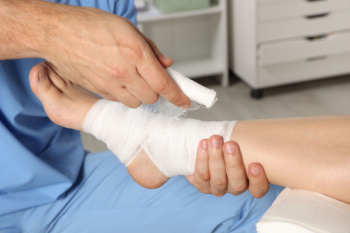
Non-diabetic foot infections can occur due to cuts, puncture wounds, or fungal infections, leading to pain, swelling, and redness. These infections often cause throbbing or sharp pain, especially when pressure is applied to the affected area. A cut or puncture wound in the foot can allow bacteria to enter, while fungal infections, like athlete's foot, can lead to cracked skin and increased vulnerability to infection. The affected area may become warm to the touch, and you might notice discharge or pus if the infection worsens. If left untreated, the infection can spread, causing more severe pain and complications. A podiatrist can help by thoroughly cleaning the wound, draining any pus, and prescribing antibiotics if necessary. For fungal infections, they may recommend antifungal treatments to clear the infection. This type of doctor will also provide advice on proper foot care to prevent future infections. If you have this type of infection, it is suggested that you schedule an appointment with a podiatrist for appropriate treatment solutions.
Wound care is an important part in dealing with diabetes. If you have diabetes and a foot wound or would like more information about wound care for diabetics, consult with David Mehl, DPM from New York. Our doctor will assess your condition and provide you with quality foot and ankle treatment.
What Is Wound Care?
Wound care is the practice of taking proper care of a wound. This can range from the smallest to the largest of wounds. While everyone can benefit from proper wound care, it is much more important for diabetics. Diabetics often suffer from poor blood circulation which causes wounds to heal much slower than they would in a non-diabetic.
What Is the Importance of Wound Care?
While it may not seem apparent with small ulcers on the foot, for diabetics, any size ulcer can become infected. Diabetics often also suffer from neuropathy, or nerve loss. This means they might not even feel when they have an ulcer on their foot. If the wound becomes severely infected, amputation may be necessary. Therefore, it is of the upmost importance to properly care for any and all foot wounds.
How to Care for Wounds
The best way to care for foot wounds is to prevent them. For diabetics, this means daily inspections of the feet for any signs of abnormalities or ulcers. It is also recommended to see a podiatrist several times a year for a foot inspection. If you do have an ulcer, run the wound under water to clear dirt from the wound; then apply antibiotic ointment to the wound and cover with a bandage. Bandages should be changed daily and keeping pressure off the wound is smart. It is advised to see a podiatrist, who can keep an eye on it.
If you have any questions please contact our offices located in Forest Hills, and Brooklyn, NY . We offer the newest diagnostic and treatment technologies for all your foot and ankle needs.
Tuesday, 18 March 2025 00:00
Running Shoes for Comfort and Performance

Selecting the right running shoes is essential for comfort, injury prevention, and optimal performance. The type of running surface plays a significant role in shoe selection. Road running shoes provide cushioning for hard pavement, while trail running shoes offer grip and support on uneven terrain. The kind of running also matters, as long-distance runners need shoes with extra cushioning, whereas sprinters benefit from lightweight, responsive designs. Personal weight should also be considered, since heavier runners may require additional support and shock absorption to reduce impact on the joints. Proper fit, arch support, and flexibility further enhance comfort and performance. Trying on different options and assessing how they feel during movement can help you find the best pair. If you have sustained a foot injury from wearing the wrong running shoes, it is suggested that you consult a podiatrist who can treat various foot conditions, and guide you toward the best shoes for your style of running.
You should always make sure your running shoes fit properly in order to avoid injury. For more information, contact David Mehl, DPM from New York. Our doctor can provide the care you need to keep you pain-free and on your feet.
Choosing the Right Running Shoe for Your Foot Type
Improper shoe sizing can cause a myriad of problems for your feet. Shoes that don’t fit you properly can lead to muscular imbalances in your body, which can result in foot, knee, and hip injuries.
Tips for Finding the Right Running Shoe
- Make sure you have a thumb’s width of wiggle room between the end of your longest toe and the front of the shoe.
- There should be little to no slipping at the heel
- Don’t assume your size in one shoe brand will be your size in another
- Do not lace up your shoes too tightly
- Walk around in the store with your new shoes before you buy them
If you have any questions, please feel free to contact our offices located in Forest Hills, and Brooklyn, NY . We offer the newest diagnostic and treatment technologies for all your foot care needs.
Tuesday, 11 March 2025 00:00
Causes and Symptoms of Hammertoe
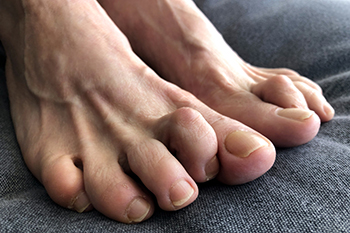
Hammertoe is a common foot deformity in which one or more toes curl downward at the middle joint, causing them to bend rather than point straight forward. Hammertoe often affects the second or third toe and can develop from wearing tight, narrow, or ill-fitting shoes. Other causes of hammertoe formation include arthritis, a high foot arch, previous trauma to the toe, tightened ligaments or tendons in the foot, or pressure from bunions. People with a family history of hammertoe or those who regularly wear constrictive footwear are particularly susceptible to this ailment. Among the symptoms of hammertoe are mild discomfort, difficulty walking, and corns or calluses forming on affected toes. In some cases, severe pain and a claw-like appearance of the toe emerge. A podiatrist can diagnose hammertoe by examining the foot and performing imaging tests like X-rays. Treatment varies depending on severity, with more serious cases often requiring surgery to realign the toe joint and relieve pain. If you have developed a toe deformity, it is suggested that you schedule an appointment with a podiatrist for an exam, diagnosis, and treatment.
Hammertoe
Hammertoes can be a painful condition to live with. For more information, contact David Mehl, DPM from New York. Our doctor will answer any of your foot- and ankle-related questions.
Hammertoe is a foot deformity that affects the joints of the second, third, fourth, or fifth toes of your feet. It is a painful foot condition in which these toes curl and arch up, which can often lead to pain when wearing footwear.
Symptoms
- Pain in the affected toes
- Development of corns or calluses due to friction
- Inflammation
- Redness
- Contracture of the toes
Causes
Genetics – People who are genetically predisposed to hammertoe are often more susceptible
Arthritis – Because arthritis affects the joints in your toes, further deformities stemming from arthritis can occur
Trauma – Direct trauma to the toes could potentially lead to hammertoe
Ill-fitting shoes – Undue pressure on the front of the toes from ill-fitting shoes can potentially lead to the development of hammertoe
Treatment
Orthotics – Custom made inserts can be used to help relieve pressure placed on the toes and therefore relieve some of the pain associated with it
Medications – Oral medications such as anti-inflammatories or NSAIDs could be used to treat the pain and inflammation hammertoes causes. Injections of corticosteroids are also sometimes used
Surgery – In more severe cases where the hammertoes have become more rigid, foot surgery is a potential option
If you have any questions, please feel free to contact our offices located in Forest Hills, and Brooklyn, NY . We offer the newest diagnostic and treatment technologies for all your foot care needs.
Tuesday, 04 March 2025 00:00
Surgery for Ingrown Toenails
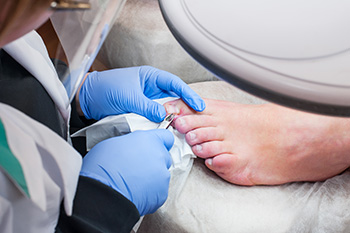
When an ingrown toenail becomes severe, surgery may be necessary to relieve pain and prevent infection. A podiatrist can perform different types of ingrown toenail surgery based on the severity of the condition. Partial nail avulsion surgery involves removing the part of the nail that is growing into the skin while preserving the healthier portion of the nail. In more severe cases, a total nail avulsion may be required, in which the entire nail is removed. To reduce the chance of recurrence, a podiatrist may perform a matrixectomy. This procedure destroys part or all of the nail matrix to prevent regrowth in the affected area. Ingrown toenail surgeries are typically performed at the podiatrist’s office setting with local anesthesia to minimize discomfort. Afterward, patients receive guidance on keeping the area clean and monitoring for any signs of infection. Addressing an ingrown toenail early can help prevent complications such as persistent pain, swelling, and drainage. If you are suffering from a severely ingrown toenail, it is suggested that you schedule an appointment with a podiatrist to find out if surgery is right for you.
Foot surgery is sometimes necessary to treat a foot ailment. To learn more, contact David Mehl, DPM of New York. Our doctor will assist you with all of your foot and ankle needs.
When Is Surgery Necessary?
Foot and ankle surgery is generally reserved for cases in which less invasive, conservative procedures have failed to alleviate the problem. Some of the cases in which surgery may be necessary include:
- Removing foot deformities like bunions and bone spurs
- Severe arthritis that has caused bone issues
- Cosmetic reconstruction
What Types of Surgery Are There?
The type of surgery you receive will depend on the nature of the problem you have. Some of the possible surgeries include:
- Bunionectomy for painful bunions
- Surgical fusion for realignment of bones
- Neuropathy decompression surgery to treat nerve damage
Benefits of Surgery
Although surgery is usually a last resort, it can provide more complete pain relief compared to non-surgical methods and may allow you to finally resume full activity.
Surgical techniques have also become increasingly sophisticated. Techniques like endoscopic surgery allow for smaller incisions and faster recovery times.
If you have any questions, please feel free to contact our offices located in Forest Hills, and Brooklyn, NY . We offer the newest diagnostic and treatment technologies for all your foot care needs.
Blog Archives
- February 2026
- January 2026
- December 2025
- November 2025
- October 2025
- September 2025
- August 2025
- July 2025
- June 2025
- May 2025
- April 2025
- March 2025
- February 2025
- January 2025
- December 2024
- November 2024
- October 2024
- September 2024
- August 2024
- July 2024
- June 2024
- May 2024
- April 2024
- March 2024
- February 2024
- January 2024
- December 2023
- November 2023
- October 2023
- September 2023
- August 2023
- July 2023
- June 2023
- May 2023
- April 2023
- March 2023
- February 2023
- January 2023
