Connect With Us
Blog
Items filtered by date: September 2024
Tuesday, 24 September 2024 00:00
Caring for Corns on Children’s Feet

Corns are small, thickened areas of skin that develop on children's feet due to pressure or friction, often caused by wearing poorly fitting shoes. They typically appear on the tops or sides of toes or on the soles. While not usually dangerous, corns can cause discomfort or pain, especially when walking. To manage corns, parents should ensure their child's shoes fit properly, offering enough room for toes to move freely. If a child has diabetes or circulation issues, complications from corns can develop as their feet may be more vulnerable to infections or other foot problems. It is suggested that you consult a podiatrist if the corn persists or worsens.
Corns can make walking very painful and should be treated immediately. If you have questions regarding your feet and ankles, contact David Mehl, DPM of New York. Our doctor will treat your foot and ankle needs.
Corns: What Are They? And How Do You Get Rid of Them?
Corns are thickened areas on the skin that can become painful. They are caused by excessive pressure and friction on the skin. Corns press into the deeper layers of the skin and are usually round in shape.
Ways to Prevent Corns
There are many ways to get rid of painful corns such as:
- Wearing properly fitting shoes that have been measured by a professional
- Wearing shoes that are not sharply pointed or have high heels
- Wearing only shoes that offer support
Treating Corns
Although most corns slowly disappear when the friction or pressure stops, this isn’t always the case. Consult with your podiatrist to determine the best treatment option for your case of corns.
If you have any questions, please feel free to contact our offices located in Forest Hills, and Brooklyn, NY . We offer the newest diagnostic and treatment technologies for all your foot care needs.
Tuesday, 17 September 2024 00:00
The Healing of a Broken Foot

A broken foot occurs when one or more of the bones in the foot are fractured, often due to trauma, such as a fall, car accident, or sports injury. Symptoms typically include intense pain, swelling, bruising, and difficulty walking or bearing weight. The severity of the fracture, its location, and the treatment approach all influence healing time. Generally, a simple fracture can take six to eight weeks to heal, while more complex fractures may require several months, especially if surgery is needed. During the healing process, immobilization with a cast or boot is usually prescribed, and in some cases, crutches are provided to avoid putting weight on the foot. If you have broken your foot, it is suggested that you schedule an appointment with a podiatrist and follow their instructions to ensure proper healing and avoid complications.
A broken foot requires immediate medical attention and treatment. If you need your feet checked, contact David Mehl, DPM from New York. Our doctor can provide the care you need to keep you pain-free and on your feet.
Broken Foot Causes, Symptoms, and Treatment
A broken foot is caused by one of the bones in the foot typically breaking when bended, crushed, or stretched beyond its natural capabilities. Usually the location of the fracture indicates how the break occurred, whether it was through an object, fall, or any other type of injury.
Common Symptoms of Broken Feet:
- Bruising
- Pain
- Redness
- Swelling
- Blue in color
- Numbness
- Cold
- Misshapen
- Cuts
- Deformities
Those that suspect they have a broken foot shoot seek urgent medical attention where a medical professional could diagnose the severity.
Treatment for broken bones varies depending on the cause, severity and location. Some will require the use of splints, casts or crutches while others could even involve surgery to repair the broken bones. Personal care includes the use of ice and keeping the foot stabilized and elevated.
If you have any questions, please feel free to contact our offices located in Forest Hills, and Brooklyn, NY . We offer the newest diagnostic and treatment technologies for all your foot care needs.
Tuesday, 10 September 2024 00:00
Hammertoe Relief

Hammertoes are a painful condition where one or more of the smaller toes become bent at the middle joint, resembling a hammer. This deformity is often caused by wearing tight, ill-fitting shoes, muscle imbalances, or conditions like arthritis. Over time, hammertoes can lead to discomfort, corns, calluses, and difficulty in walking. To relieve the pain associated with hammertoes, start by choosing shoes with a roomy toe box that allows your toes to lie flat. Avoid high heels and shoes that squeeze the toes together. Adding cushioning or orthotic inserts can help to alleviate pressure on the affected toes. Gentle stretching exercises for the toes and foot muscles can also improve flexibility and reduce discomfort. If conservative treatments do not provide sufficient relief, or if the condition worsens, it is suggested that you schedule a visit to a podiatrist for more advanced treatment, which may involve surgical intervention to correct the deformity and restore proper toe alignment.
Hammertoes can be a painful condition to live with. For more information, contact David Mehl, DPM of New York. Our doctor will answer any of your foot- and ankle-related questions.
Hammertoe
Hammertoe is a foot deformity that occurs due to an imbalance in the muscles, tendons, or ligaments that normally hold the toe straight. It can be caused by the type of shoes you wear, your foot structure, trauma, and certain disease processes.
Symptoms
- Painful and/or difficult toe movement
- Swelling
- Joint stiffness
- Calluses/Corns
- Physical deformity
Risk Factors
- Age – The risk of hammertoe increases with age
- Sex – Women are more likely to have hammertoe compared to men
- Toe Length – You are more likely to develop hammertoe if your second toe is longer than your big toe
- Certain Diseases – Arthritis and diabetes may make you more likely to develop hammertoe
Treatment
If you have hammertoe, you should change into a more comfortable shoe that provides enough room for your toes. Exercises such as picking up marbles may strengthen and stretch your toe muscles. Nevertheless, it is important to seek assistance from a podiatrist in order to determine the severity of your hammertoe and see which treatment option will work best for you.
If you have any questions, please feel free to contact our offices located in Forest Hills, and Brooklyn, NY . We offer the newest diagnostic and treatment technologies for all your foot care needs.
Tuesday, 03 September 2024 00:00
Symptoms and Causes of Black Toenail Fungus
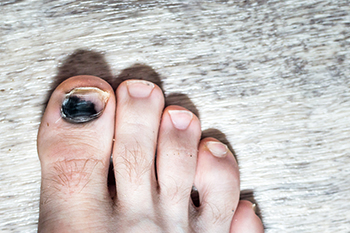
Black toenail fungus, medically known as onychomycosis, is a fungal infection that affects the toenail, leading to discoloration and potential nail damage. This condition often begins as a yellow or white spot under the nail, eventually turning black as the infection progresses. Common symptoms include thickened nails, brittleness, and an unpleasant odor. The fungus thrives in warm, moist environments, making it more prevalent among diabetics, as they are more susceptible to infections due to poor circulation and a reduced immune response. Other causes include frequent exposure to damp conditions, wearing tight shoes, or sharing contaminated footwear. If you have developed this type of toenail fungus, it is suggested that you promptly schedule an appointment with a podiatrist for treatment, which often includes prescribed medication.
If left untreated, toenail fungus may spread to other toenails, skin, or even fingernails. If you suspect you have toenail fungus it is important to seek treatment right away. For more information about treatment, contact David Mehl, DPM of New York. Our doctor can provide the care you need to keep you pain-free and on your feet.
Symptoms
- Warped or oddly shaped nails
- Yellowish nails
- Loose/separated nail
- Buildup of bits and pieces of nail fragments under the nail
- Brittle, broken, thickened nail
Treatment
If self-care strategies and over-the-counter medications does not help your fungus, your podiatrist may give you a prescription drug instead. Even if you find relief from your toenail fungus symptoms, you may experience a repeat infection in the future.
Prevention
In order to prevent getting toenail fungus in the future, you should always make sure to wash your feet with soap and water. After washing, it is important to dry your feet thoroughly especially in between the toes. When trimming your toenails, be sure to trim straight across instead of in a rounded shape. It is crucial not to cover up discolored nails with nail polish because that will prevent your nail from being able to “breathe”.
In some cases, surgical procedure may be needed to remove the toenail fungus. Consult with your podiatrist about the best treatment options for your case of toenail fungus.
If you have any questions please contact our offices located in Forest Hills, and Brooklyn, NY . We offer the newest diagnostic and treatment technologies for all your foot and ankle needs.
Blog Archives
- February 2026
- January 2026
- December 2025
- November 2025
- October 2025
- September 2025
- August 2025
- July 2025
- June 2025
- May 2025
- April 2025
- March 2025
- February 2025
- January 2025
- December 2024
- November 2024
- October 2024
- September 2024
- August 2024
- July 2024
- June 2024
- May 2024
- April 2024
- March 2024
- February 2024
- January 2024
- December 2023
- November 2023
- October 2023
- September 2023
- August 2023
- July 2023
- June 2023
- May 2023
- April 2023
- March 2023
- February 2023
- January 2023
