Connect With Us
Blog
Items filtered by date: October 2025
Tuesday, 28 October 2025 00:00
Preventing Ankle Sprains in Runners

Ankle sprains in runners often develop from poor running form, uneven surfaces, wearing unsuitable footwear, or weak ankle muscles. Repetitive strain and lack of support can lead to inflammation, sprains, and chronic discomfort that limit performance. Preventing these injuries begins with gradual mileage increases, proper warm up and cool down routines, and strengthening exercises to enhance ankle stability. Wearing shoes designed for your foot type and replacing them regularly can also reduce stress on the joints. A podiatrist can assess your gait, identify underlying biomechanical issues, and recommend custom orthotics or rehabilitation strategies. For expert diagnosis and relief from ankle pain, it is suggested that you schedule an appointment with a podiatrist who can treat various foot conditions, and guide you on additional running injury prevention tips.
Although ankle sprains are common, they aren’t always minor injuries. If you need your ankle injury looked at, contact David Mehl, DPM from New York. Our doctor can provide the care you need to keep you pain-free and on your feet.
How Does an Ankle Sprain Occur?
Ankle sprains are the result of a tear in the ligaments within the ankle. These injuries may happen when you make a rapid shifting movement while your foot is planted. A less common way to sprain your ankle is when your ankle rolls inward while your foot turns outward.
What Are the Symptoms?
- Pain at the sight of the tear
- Bruising/Swelling
- Ankle area is tender to touch
- In severe cases, may hear/feel something tear
- Skin discoloration
Preventing a Sprain
- Wearing appropriate shoes for the occasion
- Stretching before exercises and sports
- Knowing your limits
Treatment of a Sprain
In many cases, the RICE method (Rest, Ice, Compression, and Elevate) is used to treat ankle sprains. However, you should see a podiatrist to see which treatment option would work best with your injury. In severe cases, surgery may be required.
It is important to ask your doctor about rehab options after you receive treatment for your injury. Stretching, strength training, and balance exercises may help the ankle heal while also preventing further injury.
If you have any questions, please feel free to contact our offices located in Forest Hills, and Brooklyn, NY . We offer the newest diagnostic and treatment technologies for all your foot care needs.
Tuesday, 21 October 2025 00:00
Plantar Fasciitis Is a Common Cause of Heel Pain
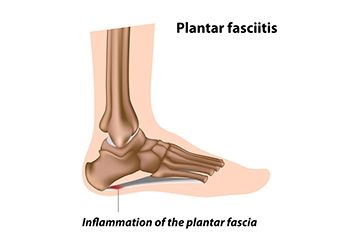
Plantar fasciitis is an inflammation of the plantar fascia, which is the thick band of tissue connecting the heel bone to the toes that supports the arch of the foot. It is one of the most common causes of heel pain and often results from repetitive strain or overstretching. Causes include excessive walking or standing, wearing unsupportive shoes, obesity, and tight calf muscles. Symptoms typically include sharp heel pain, especially with the first steps in the morning or after rest. Risk factors include flat feet, high arches, and overuse from physical activity. A podiatrist can provide effective treatments like orthotics, stretching exercises, and pain management. If you have heel pain, it is suggested that you consult a podiatrist who can accurately diagnose the cause of heel pain, and offer effective relief and treatment solutions.
Plantar fasciitis can be very painful and inconvenient. If you are experiencing heel pain or symptoms of plantar fasciitis, contact David Mehl, DPM from New York. Our doctor can provide the care you need to keep you pain-free and on your feet.
What Is Plantar Fasciitis?
Plantar fasciitis is the inflammation of the thick band of tissue that runs along the bottom of your foot, known as the plantar fascia, and causes mild to severe heel pain.
What Causes Plantar Fasciitis?
- Excessive running
- Non-supportive shoes
- Overpronation
- Repeated stretching and tearing of the plantar fascia
How Can It Be Treated?
- Conservative measures – anti-inflammatories, ice packs, stretching exercises, physical therapy, orthotic devices
- Shockwave therapy – sound waves are sent to the affected area to facilitate healing and are usually used for chronic cases of plantar fasciitis
- Surgery – usually only used as a last resort when all else fails. The plantar fascia can be surgically detached from the heel
While very treatable, plantar fasciitis is definitely not something that should be ignored. Especially in severe cases, speaking to your doctor right away is highly recommended to avoid complications and severe heel pain. Your podiatrist can work with you to provide the appropriate treatment options tailored to your condition.
If you have any questions, please feel free to contact our offices located in Forest Hills, and Brooklyn, NY . We offer the newest diagnostic and treatment technologies for all your foot care needs.
Tuesday, 14 October 2025 00:00
Understanding 5 Common Types of Ankle Fractures

Ankle fractures can vary in severity and type. Five common forms include chip fractures, transverse fractures, oblique fractures, vertical fractures, and comminuted fractures. Chip fractures involve a small piece of bone breaking off, often due to twisting injuries. Transverse fractures are horizontal breaks, usually from direct impact. Oblique fractures have an angled break, typically from a combination of twisting and force. Vertical fractures extend lengthwise and are often seen with high-impact trauma. Comminuted fractures occur when the bone shatters into multiple pieces. Symptoms of all types include severe pain, swelling, bruising, inability to bear weight, and visible deformity. The ankle may feel unstable or numb, depending on nerve involvement. A podiatrist can diagnose the type of fracture through physical examination and imaging, such as X-rays or CT scans. Treatment may involve immobilization, casting, or surgery in more complex cases. To ensure proper healing and avoid complications, it is suggested that you make an appointment with a podiatrist.
Broken ankles need immediate treatment. If you are seeking treatment, contact David Mehl, DPM from New York. Our doctor can provide the care you need to keep you pain-free and on your feet.
Broken Ankles
A broken ankle is experienced when a person fractures their tibia or fibula in the lower leg and ankle area. Both of these bones are attached at the bottom of the leg and combine to form what we know to be our ankle.
When a physician is referring to a break of the ankle, he or she is usually referring to a break in the area where the tibia and fibula are joined to create our ankle joint. Ankles are more prone to fractures because the ankle is an area that suffers a lot of pressure and stress. There are some obvious signs when a person experiences a fractured ankle, and the following symptoms may be present.
Symptoms of a Fractured Ankle
- Excessive pain when the area is touched or when any pressure is placed on the ankle
- Swelling around the area
- Bruising of the area
- Area appears to be deformed
If you suspect an ankle fracture, it is recommended to seek treatment as soon as possible. The sooner you have your podiatrist diagnose the fracture, the quicker you’ll be on the way towards recovery.
If you have any questions, please feel free to contact our offices located in Forest Hills, and Brooklyn, NY . We offer the newest diagnostic and treatment technologies for all your foot care needs.
Tuesday, 07 October 2025 00:00
What Are the Symptoms of PAD?
 The condition that is referred to as peripheral artery disease (PAD) can cause poor circulation of the feet and various organs in the body. Common symptoms many patients experience can include numbing sensations in the feet, a loss of hair on the legs, and difficulty walking. It can occur as a result of arteries in the body that become narrow, which can gradually close. This can prevent necessary blood flow, and the feet may feel cold and turn blue. There are methods that can be implemented that may help to prevent PAD. These can include not smoking, incorporating a gentle exercise program into your daily routine, in addition to eating foods that are healthy. There may be existing medical conditions that can lead to PAD, including diabetes, obesity, or kidney disease. If you are experiencing numbing or tingling sensations in your feet, it is strongly suggested that you consult with a podiatrist who can properly diagnose and treat PAD.
Peripheral artery disease can pose a serious risk to your health. It can increase the risk of stroke and heart attack. If you have symptoms of peripheral artery disease, consult with David Mehl, DPM from New York. Our doctor will assess your condition and provide you with quality foot and ankle treatment.
Peripheral artery disease (PAD) is when arteries are constricted due to plaque (fatty deposits) build-up. This results in less blood flow to the legs and other extremities. The main cause of PAD is atherosclerosis, in which plaque builds up in the arteries.
Symptoms
Symptoms of PAD include:
- Claudication (leg pain from walking)
- Numbness in legs
- Decrease in growth of leg hair and toenails
- Paleness of the skin
- Erectile dysfunction
- Sores and wounds on legs and feet that won’t heal
- Coldness in one leg
It is important to note that a majority of individuals never show any symptoms of PAD.
Diagnosis
While PAD occurs in the legs and arteries, Podiatrists can diagnose PAD. Podiatrists utilize a test called an ankle-brachial index (ABI). An ABI test compares blood pressure in your arm to you ankle to see if any abnormality occurs. Ultrasound and imaging devices may also be used.
Treatment
Fortunately, lifestyle changes such as maintaining a healthy diet, exercising, managing cholesterol and blood sugar levels, and quitting smoking, can all treat PAD. Medications that prevent clots from occurring can be prescribed. Finally, in some cases, surgery may be recommended.
If you have any questions, please feel free to contact our offices located in Forest Hills, and Brooklyn, NY . We offer the newest diagnostic and treatment technologies for all your foot care needs.
Blog Archives
- February 2026
- January 2026
- December 2025
- November 2025
- October 2025
- September 2025
- August 2025
- July 2025
- June 2025
- May 2025
- April 2025
- March 2025
- February 2025
- January 2025
- December 2024
- November 2024
- October 2024
- September 2024
- August 2024
- July 2024
- June 2024
- May 2024
- April 2024
- March 2024
- February 2024
- January 2024
- December 2023
- November 2023
- October 2023
- September 2023
- August 2023
- July 2023
- June 2023
- May 2023
- April 2023
- March 2023
- February 2023
- January 2023
