Connect With Us
Blog
Items filtered by date: May 2024
Tuesday, 28 May 2024 00:00
Understanding Pediatric Foot Alignment Deformities
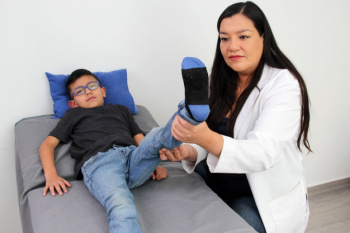
Pediatric foot alignment deformities encompass a range of conditions affecting the structure and function of children's feet. These deformities can manifest in various forms, including flat feet, toe walking, in-toeing, and out-toeing. While some children may outgrow these issues naturally as they develop, others may require intervention to prevent potential complications. Diagnosis typically involves a thorough physical examination by a podiatrist, assessing gait patterns, foot alignment, and range of motion. In some cases, imaging studies such as X-rays may be utilized to further evaluate the condition. Treatment approaches vary depending on the specific deformity and its severity, ranging from observation and monitoring to orthotic devices, or surgical intervention in more severe cases. Early detection and intervention are essential in addressing pediatric foot alignment deformities, ensuring proper development and function of the feet as children grow and mature. If your child has been born with any type of foot deformity, it is suggested that you have a podiatrist on your healthcare team who can monitor and treat the specific condition.
The health of a child’s feet is vital to their overall well-being. If you have any questions regarding foot health, contact David Mehl, DPM of New York. Our doctor can provide the care you need to keep you pain-free and on your feet.
Tips for Keeping Children's Feet Healthy
- Make sure their shoes fit properly
- Look for any signs of in-toeing or out-toeing
- Check to see if they have Clubfoot (condition that affects your child’s foot and ankle, twisting the heel and toes inward) which is one of the most common nonmajor birth defects.
- Lightly cover your baby’s feet (Tight covers may keep your baby from moving their feet freely, and could prevent normal development)
- Allow your toddler to go shoeless (Shoes can be restricting for a young child’s foot)
- Cut toenails straight across to avoid ingrown toenails
- Keep your child’s foot clean and dry
- Cover cuts and scrapes. Wash any scratches with soap and water and cover them with a bandage until they’ve healed.
If you have any questions, please feel free to contact our offices located in Forest Hills, and Brooklyn, NY . We offer the newest diagnostic and treatment technologies for all your foot care needs.
Tuesday, 21 May 2024 00:00
Diagnosis and Causes of Hammertoe

Hammertoe, a condition affecting the toes, manifests as an abnormal bend in one or more joints, resembling a hammer's shape. This deformity typically occurs in the second, third, or fourth toe, leading to discomfort and difficulty while wearing shoes. Causes of hammertoe vary, with prominent factors including prolonged wearing of ill-fitting footwear, toe injuries, muscle imbalance, and conditions like arthritis. Diagnosing hammertoe involves a physical examination by a podiatrist, who assesses the toe's flexibility, alignment, and range of motion. Additionally, X-rays may be performed to confirm the diagnosis and evaluate the severity of the deformity. Early detection is essential, as untreated hammertoe can worsen over time, leading to chronic pain and mobility issues. Once diagnosed, treatment options may include orthotic devices, toe exercises, shoe modifications, and in severe cases, surgery to correct the toe's alignment. If you have a hammertoe, it is strongly suggested that you consult a podiatrist who can determine the best course of treatment for you.
Hammertoe
Hammertoes can be a painful condition to live with. For more information, contact David Mehl, DPM from New York. Our doctor will answer any of your foot- and ankle-related questions.
Hammertoe is a foot deformity that affects the joints of the second, third, fourth, or fifth toes of your feet. It is a painful foot condition in which these toes curl and arch up, which can often lead to pain when wearing footwear.
Symptoms
- Pain in the affected toes
- Development of corns or calluses due to friction
- Inflammation
- Redness
- Contracture of the toes
Causes
Genetics – People who are genetically predisposed to hammertoe are often more susceptible
Arthritis – Because arthritis affects the joints in your toes, further deformities stemming from arthritis can occur
Trauma – Direct trauma to the toes could potentially lead to hammertoe
Ill-fitting shoes – Undue pressure on the front of the toes from ill-fitting shoes can potentially lead to the development of hammertoe
Treatment
Orthotics – Custom made inserts can be used to help relieve pressure placed on the toes and therefore relieve some of the pain associated with it
Medications – Oral medications such as anti-inflammatories or NSAIDs could be used to treat the pain and inflammation hammertoes causes. Injections of corticosteroids are also sometimes used
Surgery – In more severe cases where the hammertoes have become more rigid, foot surgery is a potential option
If you have any questions, please feel free to contact our offices located in Forest Hills, and Brooklyn, NY . We offer the newest diagnostic and treatment technologies for all your foot care needs.
Tuesday, 14 May 2024 00:00
Broken Toe Symptoms
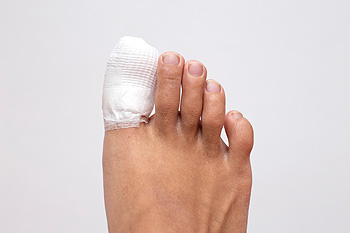 Symptoms of a broken toe typically involve immediate and severe pain at the site of the injury, which might worsen when the toe is moved or pressure is applied. Other common symptoms include swelling, bruising, and a visible deformity if the break is severe, such as the toe appearing at an abnormal angle. If the skin is broken during injury, there's also a potential for infection. Treatment for a broken toe depends on the break's severity and the fracture's nature. Treatments such as rest, elevation, and buddy taping are often sufficient for minor fractures. Sturdy and comfortable shoes are important to protect the toe during healing time. More severe cases, such as those involving a displaced bone or multiple breaks, may require a podiatrist to realign the broken bones. In rare cases, surgery may be necessary. Podiatrists may also recommend wearing a cast or a special walking boot to immobilize the toe during healing. Regular follow-ups are needed to ensure proper healing and prevent long-term complications. If you suspect a broken toe, it is suggested that you make an appointment with a podiatrist promptly for evaluation and treatment.
Broken toes may cause a lot of pain and should be treated as soon as possible. If you have any concerns about your feet, contact David Mehl, DPM from New York. Our doctor will treat your foot and ankle needs.
What Is a Broken Toe?
A broken toe occurs when one or more of the toe bones of the foot are broken after an injury. Injuries such as stubbing your toe or dropping a heavy object on it may cause a toe fracture.
Symptoms of a Broken Toe
- Swelling
- Pain (with/without wearing shoes)
- Stiffness
- Nail Injury
Although the injured toe should be monitored daily, it is especially important to have a podiatrist look at your toe if you have severe symptoms. Some of these symptoms include worsening or new pain that is not relieved with medication, sores, redness, or open wounds near the toe.
If you have any questions please feel free to contact our offices located in Forest Hills, and Brooklyn, NY . We offer the newest diagnostic tools and technology to treat your foot and ankle needs.
Tuesday, 07 May 2024 00:00
When Foot or Ankle Surgery Might Be Needed

The foot and ankle are complex structures comprised of bones, muscles, tendons, ligaments, and joints. The foot is made up of three main sections: the forefoot, midfoot, and hindfoot. Key bones include the tarsal bones, metatarsals, and phalanges. Major muscles and tendons control movement and stability. Surgery may be necessary for various conditions affecting the foot and ankle, such as severe fractures, ligament tears, tendon ruptures, or deformities like bunions or hammertoes. Other reasons for surgery can include chronic pain from arthritis or nerve compression, as well as congenital abnormalities requiring correction. In such cases, surgical intervention aims to restore function, alleviate pain, and improve mobility. Procedures range from arthroscopic surgery for minimally invasive joint repairs to complex reconstructions involving bone realignment or fusion. If you are having foot or ankle problems, it is suggested that you schedule an appointment with a podiatrist for a thorough assessment and to determine what the right treatment is for you.
Foot surgery is sometimes necessary to treat a foot ailment. To learn more, contact David Mehl, DPM of New York. Our doctor will assist you with all of your foot and ankle needs.
When Is Surgery Necessary?
Foot and ankle surgery is generally reserved for cases in which less invasive, conservative procedures have failed to alleviate the problem. Some of the cases in which surgery may be necessary include:
- Removing foot deformities like bunions and bone spurs
- Severe arthritis that has caused bone issues
- Cosmetic reconstruction
What Types of Surgery Are There?
The type of surgery you receive will depend on the nature of the problem you have. Some of the possible surgeries include:
- Bunionectomy for painful bunions
- Surgical fusion for realignment of bones
- Neuropathy decompression surgery to treat nerve damage
Benefits of Surgery
Although surgery is usually a last resort, it can provide more complete pain relief compared to non-surgical methods and may allow you to finally resume full activity.
Surgical techniques have also become increasingly sophisticated. Techniques like endoscopic surgery allow for smaller incisions and faster recovery times.
If you have any questions, please feel free to contact our offices located in Forest Hills, and Brooklyn, NY . We offer the newest diagnostic and treatment technologies for all your foot care needs.
Blog Archives
- February 2026
- January 2026
- December 2025
- November 2025
- October 2025
- September 2025
- August 2025
- July 2025
- June 2025
- May 2025
- April 2025
- March 2025
- February 2025
- January 2025
- December 2024
- November 2024
- October 2024
- September 2024
- August 2024
- July 2024
- June 2024
- May 2024
- April 2024
- March 2024
- February 2024
- January 2024
- December 2023
- November 2023
- October 2023
- September 2023
- August 2023
- July 2023
- June 2023
- May 2023
- April 2023
- March 2023
- February 2023
- January 2023
